
Air Conditioner Buying Guide 2026: Room Size, AC Capacity, Energy Rating, AI Features and More to Consider
Last Updated: 2026-06-10 09:59:10


The purchase of an air conditioner in 2026 involves more than selecting a brand or price point. Updated energy efficiency norms, rising electricity costs, and evolving consumer needs have made it necessary to evaluate multiple factors before making a decision. From choosing the right type of AC to understanding inverter technology, star ratings, and maintenance requirements, buyers must assess both short-term and long-term implications. Moreover, AI has also paved its way to ACs and that's something buyers also needs to consider before making the decision.

Show AI Summary
Summarized by AI. Consider room size, AC capacity, and energy rating before buying
- Inverter and AI features boost efficiency and convenience
- Regular maintenance ensures optimal AC performance and durability

Here's everything that you need to know and consider before buying a new AC.
Latest and Popular Mobiles


Types of air conditioners: Split or Window or Portable
Air conditioners are available in multiple formats, each suited to different needs and spaces.
Related Articles


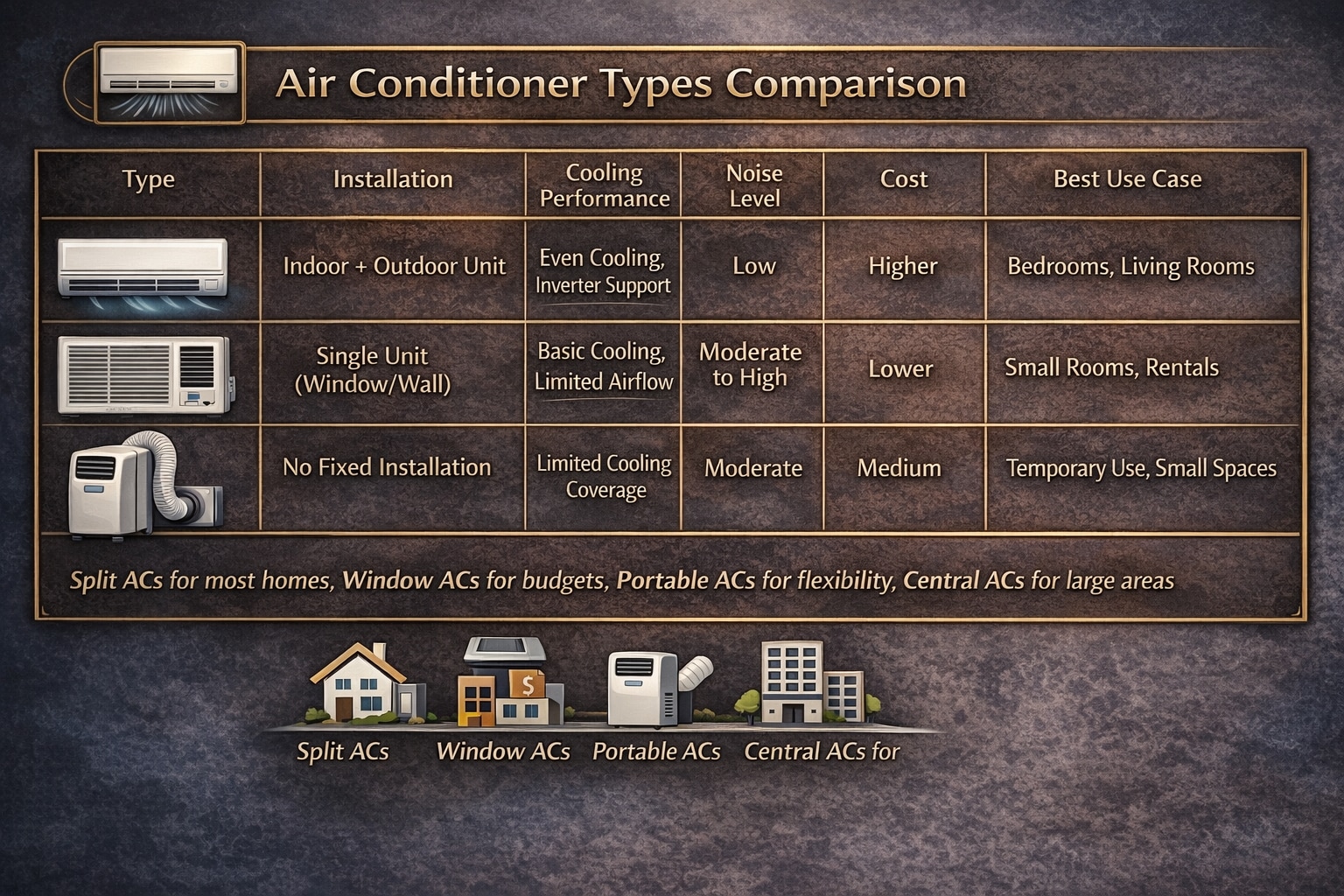
Split AC: They remain the most common choice for homes, offering quieter operation and better cooling distribution through separate indoor and outdoor units. They support inverter technology and are suitable for bedrooms and living rooms.
Window AC: They are designed as single units installed in windows or walls. These are generally more affordable and easier to install but can be noisier and less efficient compared to split models. They are often preferred in smaller rooms or rental accommodations.
Portable AC: Offer flexibility as they do not require permanent installation. However, they tend to be less efficient and are suitable only for limited use cases. For larger spaces such as offices or commercial areas, cassette and central air conditioning systems provide more powerful and uniform cooling.
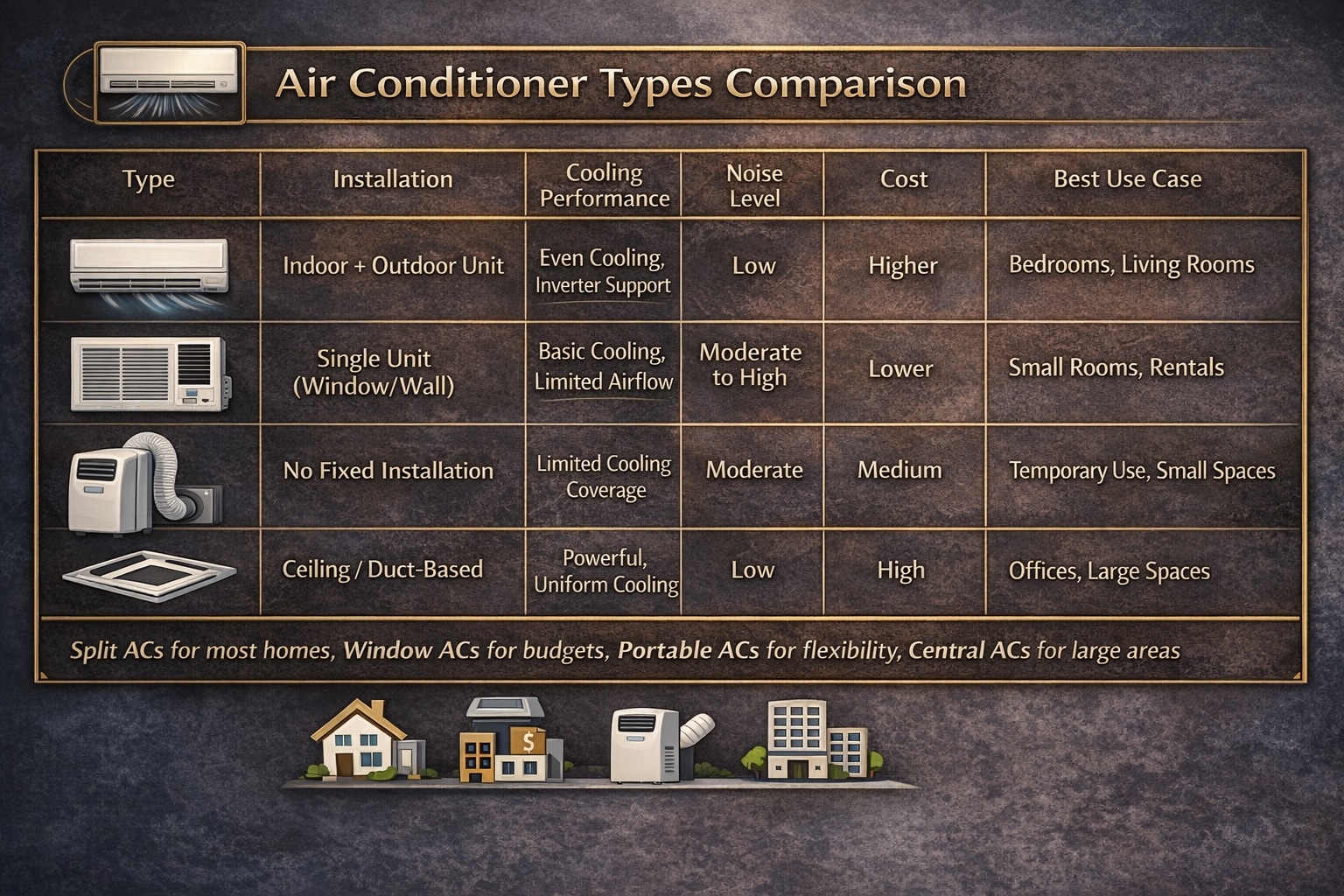
The choice: It depends on what you want from an AC. For instance, if you are looking to cool a small space, then Window AC might be a better fit. On the other hand, if you want quiet operations and more energy efficiency, the Window ACs are the right option for you. Budget also plays an important role here.
Compressor technology: Inverter vs non-inverter AC
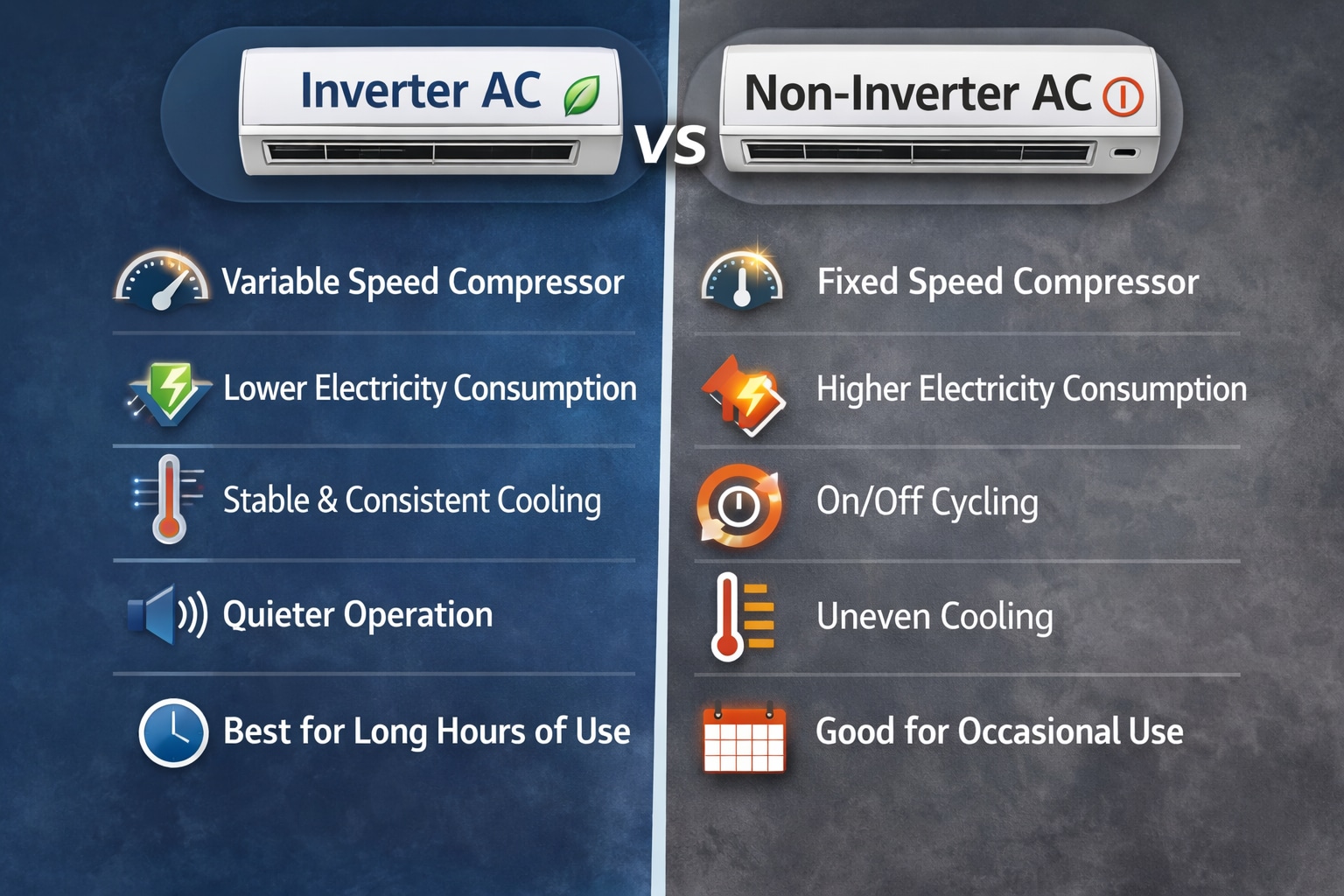
One of the most important decisions is choosing between inverter and non-inverter air conditioners. Inverter AC: Adjust compressor speed based on cooling demand. This results in lower electricity consumption, more stable temperatures, and quieter operation. These models are suitable for users who run their ACs for long hours.
Non-inverter AC: operate at a fixed speed, switching the compressor on and off as needed. While they cost less upfront, they tend to consume more electricity over time and may result in uneven cooling. For occasional use, non-inverter models may still be considered.
Choosing the right size and capacity
Selecting the correct cooling capacity is essential for efficiency. AC capacity is measured in tons and is directly linked to room size. An undersized AC will struggle to cool the space, while an oversized unit may cycle on and off frequently, leading to inefficient performance and discomfort.
Apart from room size, factors such as ceiling height, number of windows, insulation, and occupancy also influence cooling requirements. Professional assessment can help determine the appropriate capacity.
Here's the recommeded AC capacity as per the room size
Energy efficiency and star ratings
Energy efficiency is a critical factor in long-term cost savings. In India, air conditioners are rated between 1-star and 5-star based on their efficiency. A higher star rating indicates lower electricity consumption.
Although 5-star ACs come with a higher initial cost, they can reduce power bills significantly over time. For moderate usage, a 3-star AC may be sufficient, but for heavy usage, higher-rated models are recommended.
Buyers should also consider metrics like Energy Efficiency Ratio (EER) and Seasonal Energy Efficiency Ratio (SEER), along with eco-friendly refrigerants such as R-32 or R-290.
Smart features and air quality
Modern air conditioners increasingly include smart features such as app control, Wi-Fi connectivity, programmable timers, and AI-based cooling adjustments. These features allow users to monitor and control cooling remotely and improve overall convenience.
Indoor air quality has also become an important consideration. Features like HEPA filters, PM2.5 filters, ionisers, and UV sterilisation can help improve air quality, especially in urban environments.
AI-based features have also become a norm these days in ACs. For instance, Samsung ACs comes with SmartThings support that enable several parameters where it can work with your other smart home appliances to offer better cooling as well as efficiency. Features like AI predictive maintenance, Welcome and Away modes, etc can come in handy to manage the AC and overall power consumption. Now, other AC brands also offer similar set of features. And, these features are useful and often come with little additional cost.
Maintenance and durability
Regular maintenance is essential to ensure optimal performance. This includes cleaning filters, checking gas levels, and servicing coils. Buyers should also consider the availability of service networks in their area.
Copper condensers are generally preferred over aluminium due to better durability, heat transfer, and ease of repair. Warranty terms, especially for compressors, should also be reviewed carefully.
Air conditioner FAQs
What is the ideal temperature setting for an air conditioner?
When starting the AC, a lower temperature with high fan speed can cool the room quickly. Once the desired temperature is achieved, setting the AC at around 25°C is considered optimal for comfort and energy efficiency.
What is the difference between inverter and non-inverter ACs?
Inverter ACs adjust compressor speed based on cooling needs, resulting in better efficiency and consistent temperature. Non-inverter ACs operate at fixed speeds, turning on and off frequently, which increases power consumption.
What is a smart air conditioner?
A smart AC can be controlled through a smartphone or smart speaker using an internet connection. It allows remote operation, scheduling, and energy monitoring, making it convenient for users to manage cooling.
How often should AC filters be cleaned?
Filters should ideally be cleaned every two weeks for optimal performance. Regular cleaning ensures better airflow, improved cooling, and lower energy consumption.
How can energy consumption be reduced while using an AC?
Energy consumption can be reduced by maintaining optimal temperature settings, cleaning filters regularly, and using energy-efficient models. Smart features and timers can also help manage usage effectively.
Is professional installation necessary?
Split ACs require professional installation due to the need for connecting indoor and outdoor units. Window and portable ACs are easier to install and may not require professional assistance.
What factors should be considered before buying an AC?
Key factors include room size, cooling capacity, energy efficiency, type of AC, maintenance requirements, and additional features such as smart controls and air purification.
Buying an air conditioner in 2026 requires careful evaluation of multiple factors beyond just price. Understanding your room requirements, usage patterns, and long-term costs can help you choose a model that balances performance and efficiency. With advancements in inverter technology, smart features, and energy standards, selecting the right AC can improve comfort while keeping electricity consumption under control.